A balance answers “How much is there?” A checkpoint answers “Where did I expect to be by now?” Write down both using the same end date.
Build a checkpoint you can repeat
Imagine setting aside 60 before a six-week plan begins. You want 300 by the end. The amount still to save on day one is 240, so the straight-line plan adds 40 each week. The opening 60 appears once, before week one.
| End of week | Actual deposit | Actual balance | Planned balance |
|---|---|---|---|
| 1 | 40 | 100 | 100 |
| 2 | 0 | 100 | 140 |
| 3 | 55 | 155 | 180 |

Decide what belongs in the missed week
Week two has finished, so it belongs in the calculation even though its deposit was zero. Omitting it would make 155 look ahead of the week-two target of 140. Comparing it with the correct week-three target of 180 shows a shortfall of 25. A future week stays empty until that week ends.
If you deposited 35 and withdrew 10 in the same week, enter 25 as the net movement. A withdrawal of 10 with no deposit is entered as −10. Count only money assigned to this goal.
Spread the remaining amount across real deposit dates
At week three, 300 minus 155 leaves 145. An exact split over three more weeks is 48.34, 48.33 and 48.33. If those dates or amounts no longer suit your plan, record the new deadline separately so you can still explain the original gap. This worksheet assumes no interest or fees.
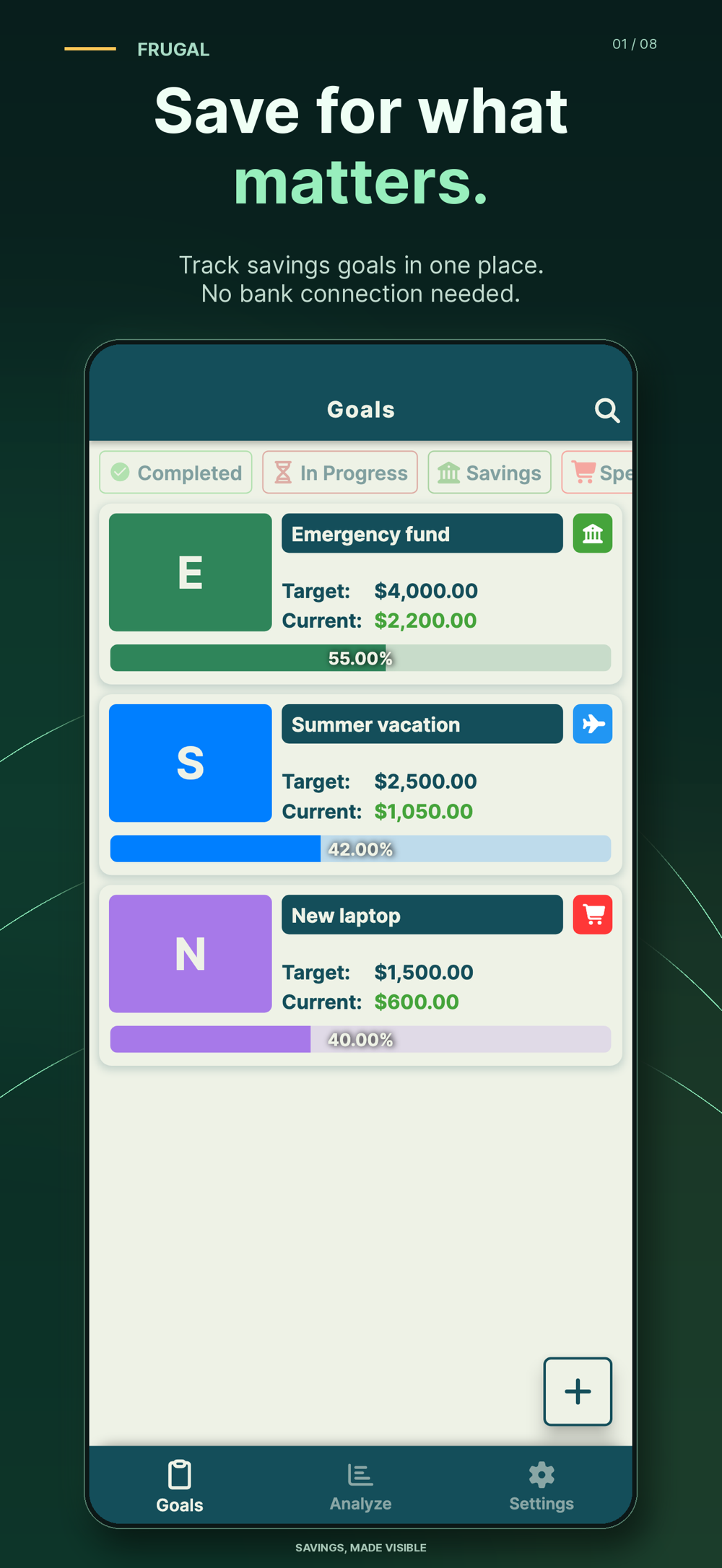
Use the savings pace tracker to repeat the checkpoint with your own numbers. Its entries stay in the current page. For ongoing goal records, explore Moocsoft’s savings goal app.
Common questions
What if I have made no deposits yet?
Before the first week ends, use only your starting balance. After the first week ends, record a zero if no money moved.
What if the last week has already ended?
Compare your closing balance with the target. Any difference is the final surplus or shortfall for that plan.
Published by Moocsoft, the studio behind Frugal. This guide uses AI assistance. How we prepare guides, label examples and handle corrections.