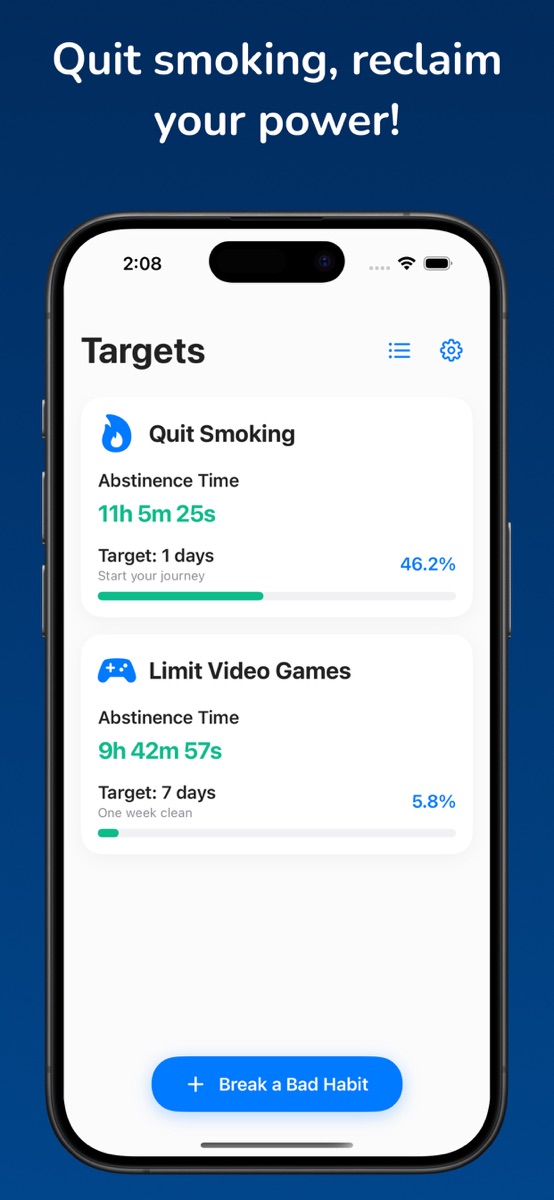
Choose checkpoints that matter to you and record what happened. A timer milestone is a record of elapsed time, not a guarantee about symptoms or recovery.
Choose a personal checkpoint
A first day, a weekend without smoking or a familiar break handled differently can all be meaningful checkpoints. They do not need to be dramatic or public. Decide what you want to notice before choosing how to celebrate it.
You might record a time milestone in QuitBit and add a sentence about the day in its journal. The counter gives a consistent time reference, while the note explains why that particular moment mattered.

Create a milestone card you can update
| Checkpoint | What to record | A possible next step |
|---|---|---|
| First 24 hours | What helped during the day | Prepare for the next difficult situation |
| First smoke-free work break | Where you went and what you did | Repeat or adapt that break plan |
| First week | Useful support and recurring triggers | Review the next week’s schedule |
| First month | Personal wins and unresolved difficulties | Adjust the support plan if needed |
This is an organizational example, not a medical recovery timeline. Different people experience quitting differently, and a difficult day does not make a previous milestone untrue.
Add a savings milestone if it motivates you
Suppose your previous average cigarette cost was $5 per day. Seven smoke-free days would correspond to $35 in estimated cigarette spending avoided, fourteen days to $70, and thirty days to $150. Those numbers assume no cigarettes were smoked during that period and the baseline cost remains constant.
You can use a small part of actual money available for a planned reward, or set it aside for a larger goal. Keep rewards within your budget. Avoided spending is an estimate until you decide what happens to that money.
If money is not your main reason for quitting, leave this field out. A record of being able to complete a particular routine without smoking may be more personally useful.
Prepare support for the day after the milestone
Reaching a checkpoint does not mean triggers disappear. Smokefree.gov recommends building a quit plan that includes reasons for quitting, difficult situations and people who can support you. Link your milestone review to that plan so you are thinking beyond the celebration itself.
A useful note has three short lines: “What helped,” “What was difficult,” and “What I will prepare next.” For example, you may notice that a work break is manageable but a particular social setting still needs a plan.
A healthcare professional can help you discuss treatment options and withdrawal symptoms. A progress app is an organizational companion, not a substitute for that support.
Keep the record honest after a setback
If you smoke after a period without cigarettes, update the current streak so it reflects the new starting point. Keep the earlier notes and completed milestones as part of the history of your effort. You do not need to pretend the streak continued or delete everything you learned.
QuitBit includes reset history, which can help keep those attempts in context. Read the setback guide for a short record-and-restart worksheet, and the trigger-journal guide if the same situation keeps appearing in your notes.
Common questions
Do these milestones predict when withdrawal ends?
No. They are personal tracking checkpoints, not medical timelines. Ask a healthcare professional about symptoms or treatment.
Should I share every milestone?
Only if you want to. A private note or a message to one supportive person can be enough.
References and further reading
Published by Moocsoft, the independent studio behind QuitBit. Examples and worksheets are illustrative. App features can vary by platform and version; see the store listing for current availability and in-app purchases.