Jo’s New Year’s goal is to invite friends over more often. This fictional supper is her first rehearsal. The $48 is what she can put toward the evening in this example. Start with your own headcount, cupboard and local prices before writing a menu.
Choose the dish that lets you sit down
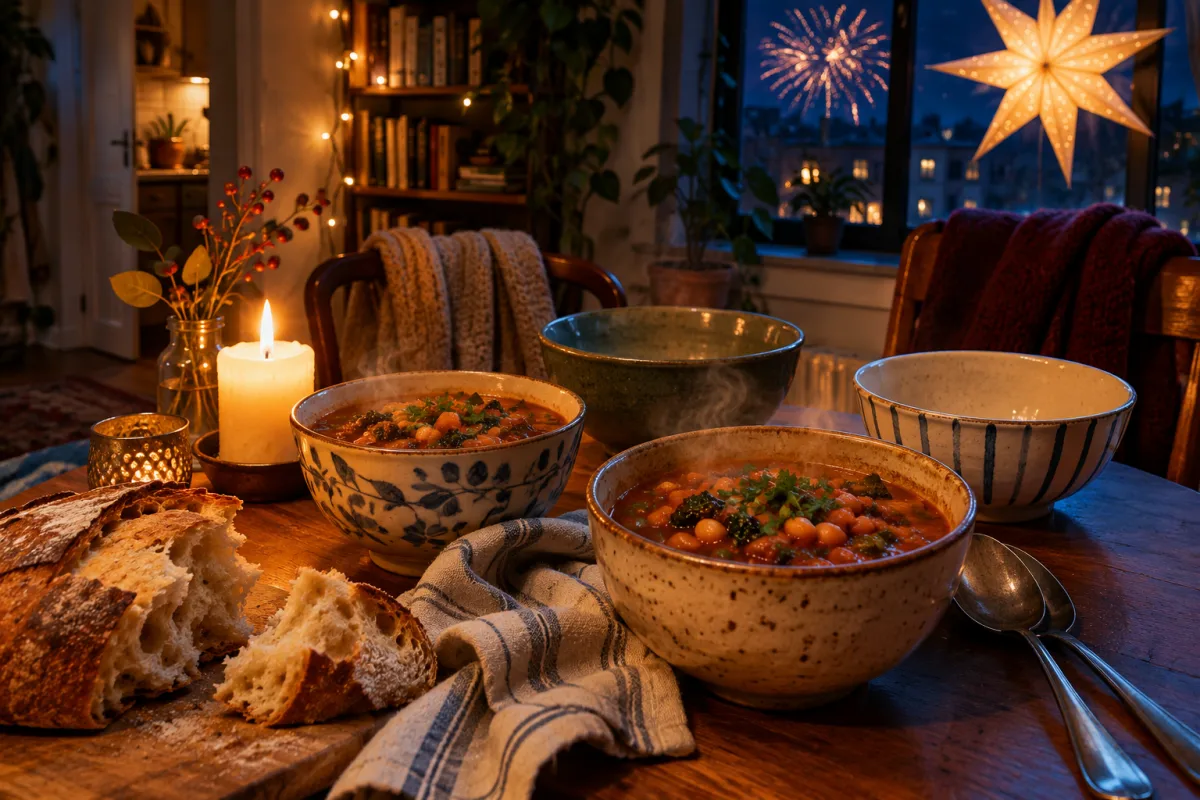
Jo chooses smoky bean stew because she’s made it on a work night and knows which pot it fits. There’s bread for dunking, an orange cake from the bakery and sparkling apple juice for midnight. She asks her guests about dietary needs before she shops. Then she checks the cupboard for oil, spices and the baking tray she uses to warm the bread.
Write the menu beside the equipment it needs. If two dishes want your only oven at the same time, change one while you’re still planning. For this supper, everything except the bread can be ready before the doorbell rings. A borrowed folding chair solves more of Jo’s hosting problem than decorations would.
Set the shopping list beside the $48
| What goes on the table | Allowance |
|---|---|
| Stew ingredients and toppings | $22 |
| Two loaves of bread | $6 |
| One cake to slice | $10 |
| Drinks for the toast | $8 |
| Unassigned | $2 |
That works out to $12 per place including the $2 cushion for the table as a whole. Jo already has $18 for the supper. She plans to put $10 aside on three December grocery days. Bulk packs can complicate the arithmetic. If she must buy a whole bag of onions, she puts the full bag price on this shopping list even though two onions will be left for January.
What changes when a fifth person says yes?
A friend’s sister will be in town. Jo checks the pot, finds a fifth chair and prices the extra food. Another tin of beans is $2 and an extra loaf is $3. She needs $5. The unassigned $2 covers part of it. She swaps the $10 cake for a $7 one that still cuts into five slices. The people, menu and quantities have changed, but the total is still $48.
If a guest offers to bring something, agree on a specific item and quantity before shopping. “Could you bring enough apple juice for five small glasses?” gives both people an answer they can use. Jo keeps the drink money on her list until the friend confirms.
Use Frugal between the two shops
Jo records her $18 starting amount and three actual $10 contributions in Frugal. When she pays $31 for the pantry items and drinks, she enters the withdrawal under “New Year’s Eve supper.” Her remaining balance is $17. At the bakery she can see exactly what is available for bread and cake. If she spends less, she can keep the difference for another dinner.